
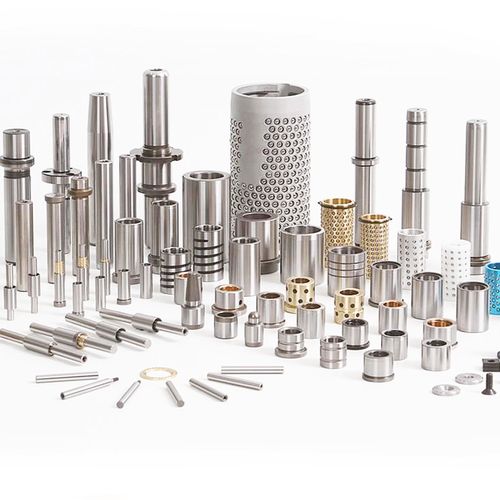
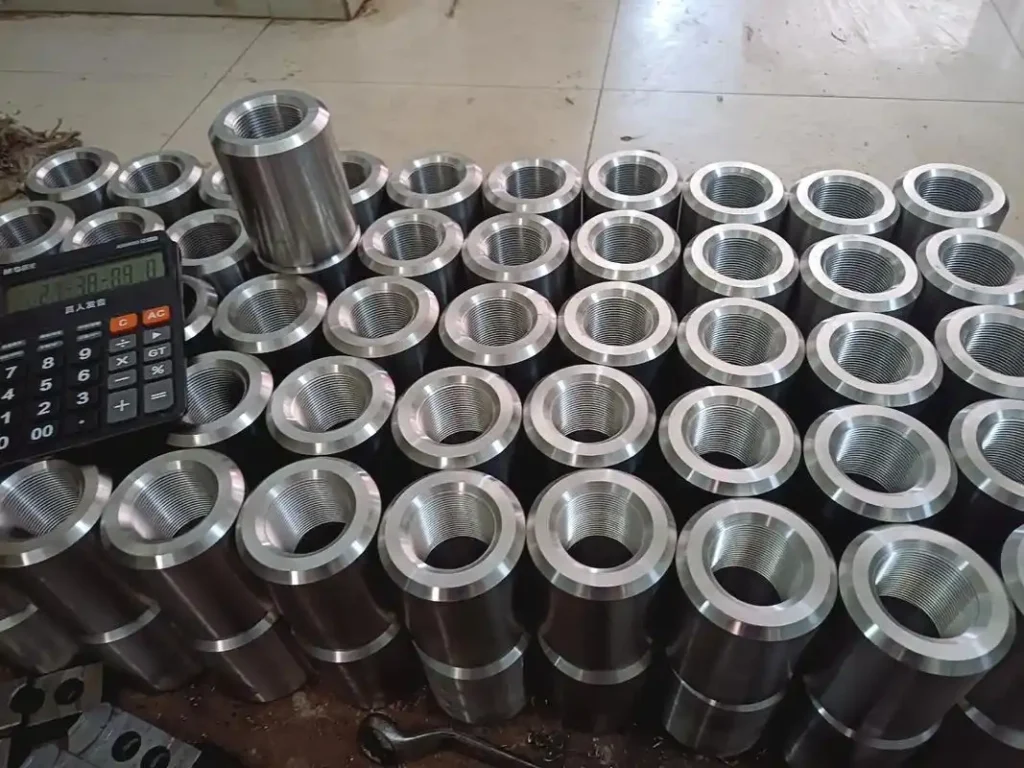
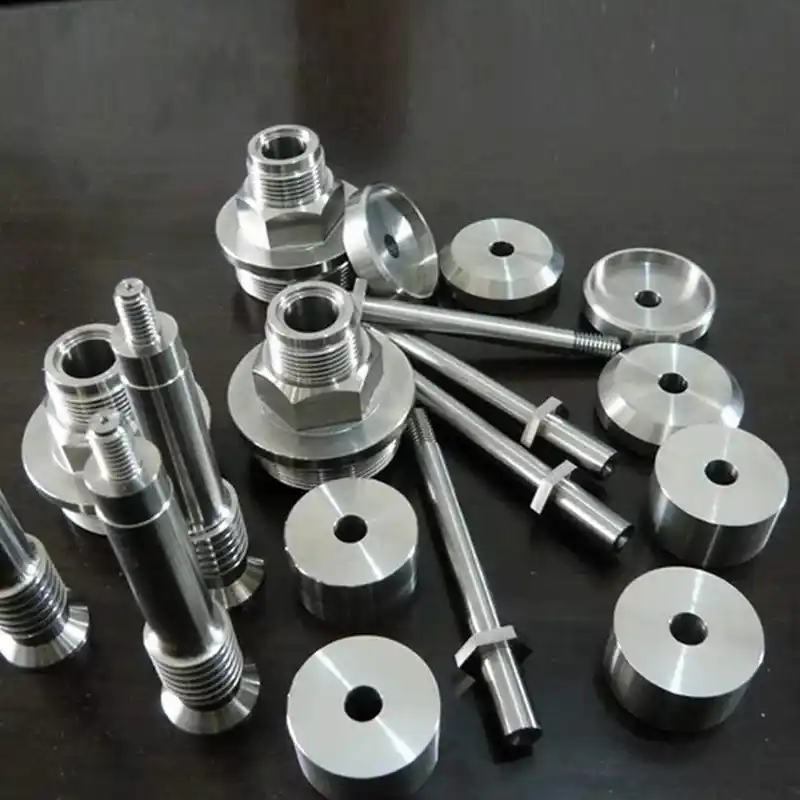
Support customized production based on customer drawings, samples, or concepts, providing diverse processing methods and technical assistance to meet individual needs.
| Product Name | CNC Machined parts |
| Material | Aluminum, Brass, Bronze, Copper, Hardened Metal, Precious Metal, Stainless Steel, Steel Alloy |
| Surface Treatment | Anodizing,Plating,Polishing,Sandblasting,Laser Engraving,Oxide Black,Nickel Plating,Chrome Plat Or Customer’s Requirements |
| Tolerance | ±0.001mm~±0.005mm |
| Lead Time | Sample: 7-15 days |
| Mass Production | 2-3 weeks |
| Package | Standard Carton Or Plastic Tray, Sponge Tray, Cardboard Tray, etc., Can Be Customized According To Customer Requirements |
| Application | Appliance, Building, Capital equipment, Energy,Instrumentation,Medical device.Telecommunications |
Battery Contact Springs
Battery contact springs are precision elastic components installed inside battery compartments. Their core function is to establish a stable electrical connection between batteries and electrical equipment, while offsetting battery assembly gaps through their own elasticity to ensure the continuity and reliability of current transmission.
I. Core Functions
Conductive Connection
Serving as a bridge for current transmission, they connect the positive and negative poles of batteries to the circuit boards of equipment, ensuring a stable power supply. They are one of the core connectors for various portable electrical devices.
Elastic Support and Buffering
Leveraging the elasticity of springs, they adapt to batteries with different dimensional tolerances, offset contact loosening caused by equipment vibration and shaking, and avoid device power failure or malfunction due to poor contact.
Error Prevention and Positioning
Some special-shaped contact springs can assist in the correct installation of batteries, prevent reverse connection of battery positive and negative poles, and protect the device circuit from damage.
II. Common Materials and Surface Treatments
1. Core Materials
- Brass: Excellent electrical conductivity and moderate cost, suitable for low-power electrical appliances used in normal temperature environments (e.g., remote controls, toys).
- Phosphor Bronze: Long-lasting elasticity, strong fatigue resistance, and better oxidation resistance than brass, suitable for frequently opened and closed devices for long-term use (e.g., smart door locks, electric toothbrushes).
- Stainless Steel: Outstanding corrosion resistance, suitable for humid and high-salt-spray environments (e.g., outdoor lighting, bathroom appliances), but its electrical conductivity is slightly lower than that of copper alloys.
- Beryllium Copper: Combining elasticity and electrical conductivity with stable mechanical properties, it is suitable for high-precision and high-reliability equipment (e.g., medical devices, precision instruments).
2. Surface Treatments
To improve electrical conductivity, corrosion resistance and wear resistance, contact springs are usually subjected to surface treatments:
- Nickel Plating: Enhances oxidation resistance and reduces contact resistance, which is the most commonly used economical treatment process.
- Gold Plating: Excellent electrical conductivity, wear resistance and corrosion resistance, suitable for high-end precision equipment (e.g., mobile phones, Bluetooth headsets).
- Tin Plating: Low cost and good solderability, suitable for spring components that need to be fixed by welding.
III. Typical Structural Types
Cylindrical Coil Compression Springs
The most common structure, cylindrical in shape, installed at the bottom or top of battery compartments. They achieve contact conduction through axial compression and are suitable for cylindrical batteries (e.g., AA, AAA batteries).
Plate Springs (Spring Contacts)
Manufactured by stamping process, they are thin, lightweight and occupy small space, suitable for miniaturized devices (e.g., button battery compartments, smart cards). Common types include U-shaped, Z-shaped and cantilever spring contacts.
Special-shaped Contact Springs
Customized non-standard structures based on equipment battery compartments (e.g., bent type, twisted type), suitable for special installation spaces and meeting personalized conductive requirements.
IV. Application Fields
Battery contact springs are widely used in various devices powered by dry batteries or rechargeable batteries:
- Consumer Electronics: Remote controls, flashlights, electronic scales, Bluetooth headsets, smart watches.
- Smart Home: Smart door locks, temperature and humidity sensors, smoke alarms.
- Automotive Electronics: Car keys, tire pressure monitors, car chargers.
- Industrial and Medical Fields: Portable detectors, blood glucose meters, handheld terminal devices.
V. Key Performance Indicators
Spring Force Precision: The spring force must match the battery specifications. Excessively low force may cause poor contact, while excessively high force may damage the battery or battery compartment.
Contact Resistance: The lower the better, which directly affects current transmission efficiency. The contact resistance of high-quality springs is usually less than 50mΩ.
Fatigue Resistance: It should withstand tens of thousands of compression and rebound cycles without failure to ensure the long-term stable operation of the device.
Corrosion Resistance: Not easy to oxidize and rust in humid and high-temperature environments to avoid poor contact.