
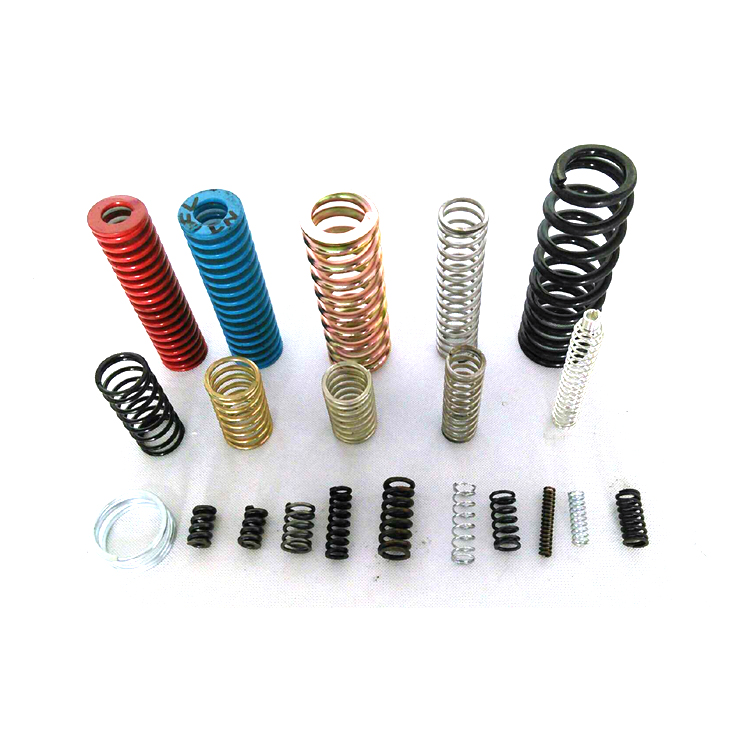
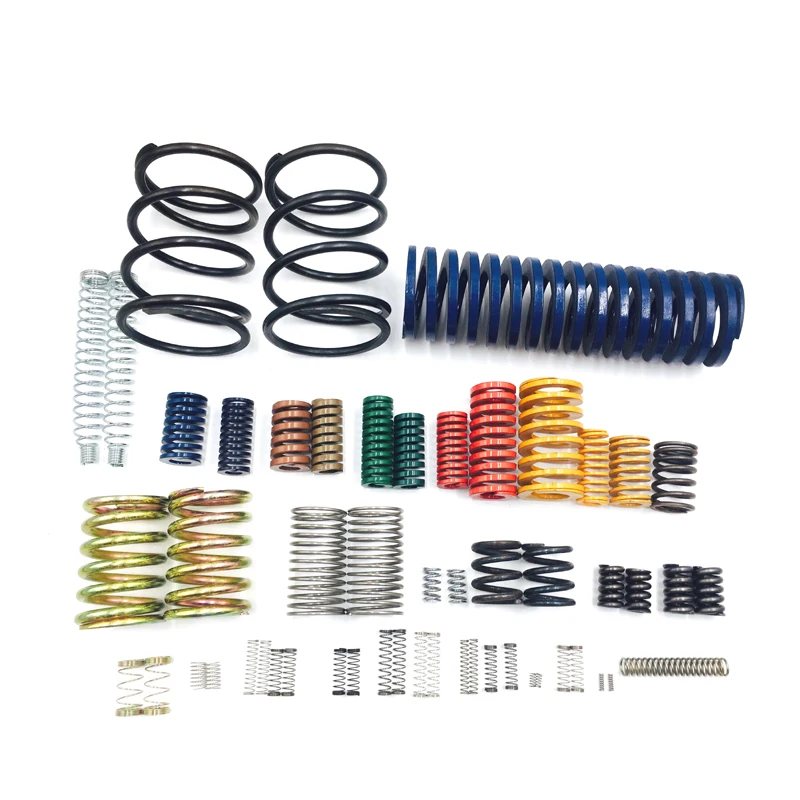
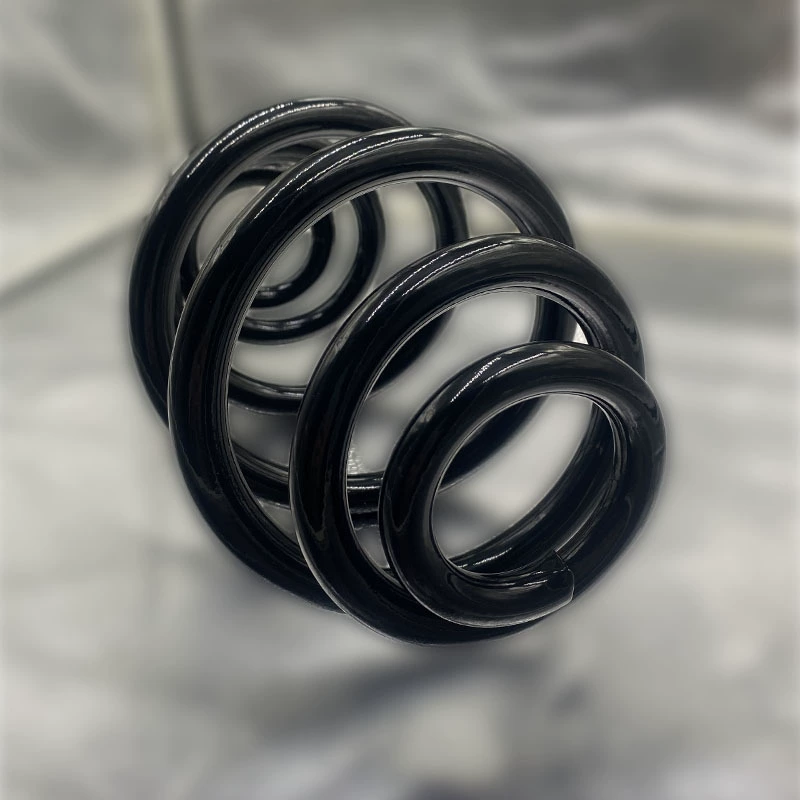
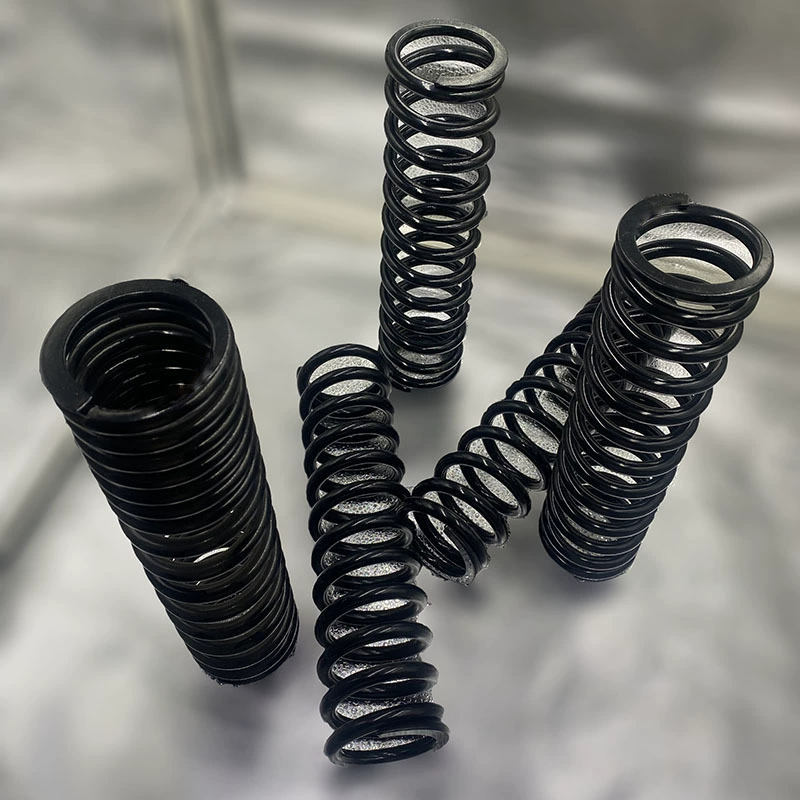
| Product Name | Compression Spring |
| Wire Diameter | 0.1mm~50mm |
| Material | Stainless steel, carbon steel, music wire, copper,etc |
| Surface Treatment | Nickel/chrome/zinc plating /beryllium copper etc. |
| Sample Time | 3-7days |
| Brand Name | NAHE |
Qingdao Nahe Electrical and Mechnical Technology Co., Ltd. is a spring manufacturer in China, specializing in the production of custom-made springs. Material can be stainless steel, carbon steel, and piano wire etc. The dimensions of the springs can be customized according to your drawings or requirements.
A compression spring is a helical spring that resists axial compression. Springs are generally classified into constant-pitch springs and variable-pitch springs. The shapes of compression springs include: cylindrical, conical, convex-concave, and a small number are non-circular. There is a certain gap between the coils of a compression spring. When a spring is subjected to an external load, it contracts and deforms to store strain energy. Variable-pitch springs are becoming increasingly common. Not just constant-pitch springs, variable-pitch springs can perform different functions in different environments.
A compression spring is a helical spring that is wound or pressed into an open coil to counteract the axial force generated during compression. Compression springs are a common type of metal spring structure. Helical compression springs are a common configuration for metal springs. This type of helical spring can work independently, although it is usually mounted on a guide rod or inside a hole. When a load is applied to a helical compression spring to shorten it, it pushes back and tries to return to its original length. Compression springs resist linear pressure (thrust). In fact, this type of spring is an effective method of energy storage.
Structure
Traditional compression springs, namely metal coil springs, feature a uniform diameter and pitch along their entire length. This structure is a standard off-the-shelf component for compression springs. Customized springs can be designed with variable diameters, variable pitches, or both, such as hourglass (concave), conical, and barrel-shaped (convex) types.
Application Fields
Compression springs have a wide range of applications, spanning from automobile engines and large stamping machines to various electrical appliances, as well as from lawn mowers to medical devices, mobile phones, electronic equipment and sensitive instruments. They may be installed wherever push-buttons are required. Tower-shaped metal springs are typically used in working environments that demand a low compressed height and high impact resistance.
Main Parameters
Spring Stiffness: Spring stiffness refers to the load change per unit of deformation, which is usually expressed in pounds per inch (lbs/in) or newtons per millimeter (N/mm).
Stress: The stress determined by load, deformation requirements and dimensions dictates spring fatigue life reduction. When a load is applied to a compression spring, the coiled loops generate stress during spring torsion. The stress on the surface of the wire is high; as the deformation of the spring changes, the load also changes, resulting in a working stress range. Stress and stress range limit the service life of the spring. The larger the stress range, the lower the stress required to achieve the same service life. If a smaller force range is required, or the spring is only suitable for static loads, higher stress will be generated. The stress on the spring when it is at its compressed height must be sufficient to maintain the predetermined shape and low enough to avoid permanent damage, since the spring is usually compressed to its compressed height during installation.
Direction of Rotation: The coiling direction of helical compression springs is classified into left-hand and right-hand, which is similar to the thread direction of screws.
Number of Coils: There are two main counting methods for the number of coils of a spring, namely active coils and total coils.
End Treatment: There are four types of end treatments for compression springs: ground or unground, closed or open.
Outer Diameter: The diameter of the cylindrical surface formed by the outer circumference of the spring coils.
Bore Diameter: It is a measurement of the space where a compression spring is inserted. This refers to the diameter of the fitting component for the compression spring and is often mistaken for the dimension of the spring itself. The bore should be designed to be larger than the outer diameter of the compression spring, with due consideration given to the spring’s tolerance and expansion under load.
Rod Diameter: This is the measurement of the rod that passes through the interior of a compression spring. It is essentially a mating component. The rod can serve as a guide shaft to minimize spring stress under load. The rod diameter should be designed to be smaller than the inner diameter tolerance of the compression spring; it must not be too small, otherwise it will lose the ability to reduce spring buckling.
Free Length: The length of a spring when it is not under load. Note: For extension springs, this may include the ends of the hooks.
Wire Diameter: This is the dimension used to measure the raw material of a spring. Traditional springs are made of round steel wire.
Material: This refers to the raw material used for manufacturing springs. Common types include carbon steel, stainless steel, nickel alloy, copper alloy, and cobalt alloy. The service environment of the spring determines the selection of its material. Please refer to the sections of Materials, Post-treatment and Electroplating for details.
Solid Height: This refers to the length of a compression spring under load. In practical terms, it is the height of the compression spring when all coils are compressed and in full contact with each other.
Spring Setting: This occurs when the spring load exceeds the elastic limit of the material itself. It is a permanent deformation that prevents the spring from returning to its original shape after being subjected to high pressure. Customers can choose whether spring setting processing is required according to their own needs.
Solid Compression Load: This is a measurement of the load applied when a spring is subjected to high compression that forces all coils to fully collapse and contact each other. The solid compression load helps product designers quickly identify the working load capacity parameters of a spring, and avoid permanent deformation caused by spring overloading.
Post-treatment: There are numerous surface treatment and electroplating processes available for springs. The selection of surface treatment and electroplating methods should be based on the application field of the springs. Surface treatment of springs can not only protect the springs, but also help us identify the spring models.
Types and Shapes of Compression Springs: There are a wide variety of shapes available for compression springs. Customized springs can be designed into your desired shapes according to the actual application environment.